Types of Love Quizzes: 4 Kinds and When Each Fits
Love score, compatibility, love language and character quizzes all measure different things. Here's how to tell them apart and which one to take.
By QuizCupid Editorial TeamAugust 20, 20264 min read
 Photo by Vitaly Gariev on Unsplash
"Love quiz" covers a lot of ground: some quizzes score your relationship, some reveal a personality type, and some are just for fun with friends. Knowing which kind you're taking (and why) makes the result actually mean something.
Know thyself.
1. The love score quiz
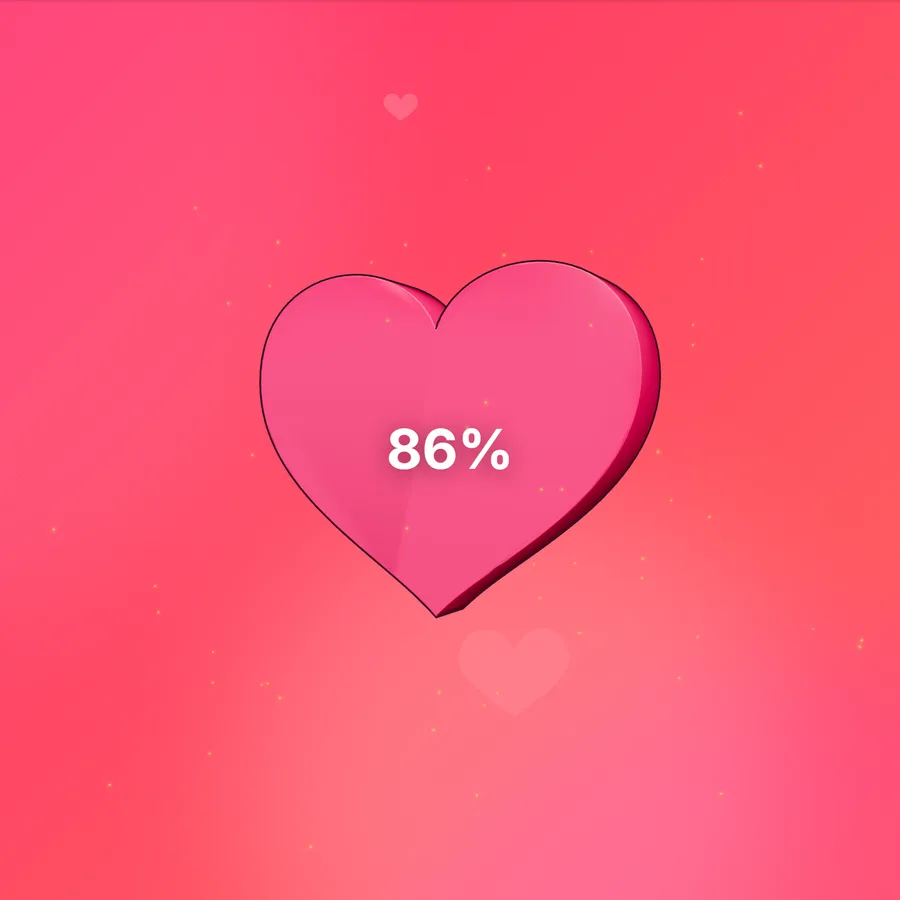
The most classic format: You answer a few questions about your daily preferences, and at the end, you get a love score. It’s not a scientific measurement—it’s a fun, shareable snapshot of the moment. The questions generally range from how much risk you take to your communication style, and the resulting percentage isn’t a judgment—it’s a conversation starter.
Try it here: Love Test.
2. The compatibility quiz
This type of assessment looks at two people rather than just one: communication style, trust, and time spent together. It is designed not to label anyone as “pass” or “fail,” but to show what’s going well and what could be worked on. Ultimately, it typically provides a breakdown across several separate categories—such as communication, trust, and time—rather than a single number, so you can see which areas are strong and which are worth discussing.
Try it here: Relationship Test.
3. The love language quiz
It’s based on the idea that people give and receive love in different ways (words, time, gifts, acts of service, physical touch). This test helps you discover which one is most dominant for you. The concept is based on psychologist Gary Chapman’s 1992 book; the results aren’t just meant to give you a label, but to help your partner express their love in a way you can understand.
Try it here: 5 Love Languages Test.
4. The "which character are you" quiz
A lighter, more fun format: Your answers place you in a love character or archetype—just like a magazine personality test—but it focuses on how you behave when you’re in love. The result might be a profile like “Romantic Idealist” or “Calm Observer”; the goal isn’t a definitive diagnosis, but a smile that comes from knowing yourself better.
Try it here: Love Character Test.
There is also a psychological explanation for why these kinds of tests feel so “accurate.” In 1949, psychologist Bertram Forer gave his students a general personality description—identical for everyone—compiled from newspaper horoscopes; the students rated it as “exactly like themselves” with a high average score of 4.26 out of 5. This tendency, now known as the “Barnum effect,” partly explains why love personality tests feel so accurate: no matter how carefully the results are written, our desire to see ourselves reflected in them also comes into play.
Which one should you take?
If you want a quick, shareable result: the love score quiz. If you and a partner want to talk about your relationship: the compatibility quiz. If you're curious about your own patterns: love language or love character. None of them are a substitute for an actual conversation, but they're a fun way to start one.
How These Quizzes Can Actually Affect Your Relationship
Taken alone, a quiz result is just a fun data point. Taken together with a partner, it becomes a low-stakes way to open a conversation that might otherwise feel awkward to start cold, like what you each actually need to feel appreciated, or how compatible your day-to-day habits really are. The quiz itself isn't the point, it's a shortcut into a conversation you might not have started on your own.
Psychologists call this the mere-measurement effect: simply being asked to predict or reflect on your own behavior can nudge that behavior, even before any result comes back. Answering ten questions about how you handle conflict with a partner can make you a bit more conscious of how you actually handle the next real disagreement, regardless of what the quiz says at the end.
Frequently Asked Questions
Are these quizzes scientifically validated? No, they're meant as a fun, reflective starting point, not a clinical assessment, treat the result as a conversation starter rather than a verdict.
Should partners take a compatibility quiz together or separately and compare? Either works, but separately and then comparing tends to produce more honest answers, since neither person is subtly influenced by watching the other answer first.
More in Psychology
All posts 🧠 Psychology
What to Do After You've Been Ghosted
Ghosting is hard to recover from precisely because it leaves no explanation. Here is why it hurts so much and how to give yourself closure.
 🧠 Psychology
Personal Space in a Relationship: The Need to Be Alone
Loving your partner and wanting time alone are not in conflict. Here is why personal space is a need, and how to talk about it without guilt.
 🧠 Psychology
What Is Love Bombing, and How Do You Recognize It?
Overwhelming attention in a relationship's early weeks is sometimes real connection, sometimes a manipulation pattern called love bombing.
More Posts
- Love or Obsession? What the Film 'Obsession' Really Shows
- The Anxious-Avoidant Attachment Trap
- The Difference Between Healthy Jealousy and Harmful Jealousy
- How Depression Affects Relationships
- Love Language Lessons From Anime Characters
- How Social Media Changed Relationships
- What Are Attachment Styles and How Do They Shape Love?
- What Is a Love Language, and How Do You Discover Yours?
Try a Test
All testsPlayful tests to help you discover yourself and your relationship.
- Love TestAnswer a few short questions about your everyday choices, find your love score, and share it with friends.
- Which Love Character Are You?Playful questions about how you act when you're in love reveal the love character that fits you best.
- Relationship Fit TestQuestions on communication, trust, and shared time measure how in sync your relationship really is.